
Chernobyl was a tragedy but our fossil fuel dependency is far more dangerous than nuclear energy - Professor Tony Ryan
Forty years ago, a reactor at the Chernobyl nuclear power plant exploded releasing a radioactive cloud across Europe and devastation that was felt across the globe. This disaster, and the destruction it caused, is rightfully remembered in history, but objectively speaking, our dependence on fossil fuels is the real threat to life on this planet.
Estimates for annual global deaths attributable to fossil fuel pollution vary, but current research suggests the toll is between 7 million and 8.3 million people per year.
To put it into perspective, that is roughly one in five deaths globally caused by the air we breathe as a result of burning coal, oil, and gas.
Burning fossil fuels is releasing clouds of death into our atmosphere every minute of every day, on a scale that eclipses the destruction caused by the worst nuclear power plant melt downs.
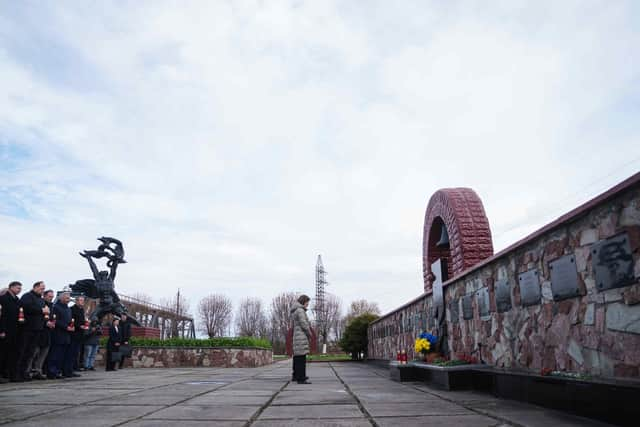

The United Nations estimates that, of the 620,000 affected by the catastrophic explosion at Chernobyl, 4,000-9,000 will die of cancer over a 70 year period - a rate of 60-130 people a year.
As tragic as these deaths are for grief stricken families and communities, and the spectre of death that haunts the disaster’s survivors, a much more prolific killer lurks in the very air we breathe.
The figures are stark and undeniable; data shows up to 8 million people are killed by fossil fuel emissions every year, while NASA estimates that nuclear power, including that generated by Chernobyl, has saved 1.8 million lives.
When scientists compare the mortality rate of different energy sources they look at the death rate per terawatt-hour - the amount of electricity used by 150,000 citizens in the European Union in a single year.
Burning coal leads to 24.4 deaths per terawatt-hour, compared to nuclear’s 0.03 deaths, a figure that includes its disasters and occupational deaths caused by workplace accidents.
In other words, coal is roughly 800 to 1,000 times more deadly than nuclear power per unit of energy produced.
Even more striking is the fact that if Chernobyl hadn’t been built (and then exploded) more people would have died an early death from the pollution caused by the coal power it displaced.
Chernobyl produced 308 kWh of electricity over its lifetime and caused 4,000 early deaths, the air-pollution from the same amount of coal-powered electricity would have killed 7,500 people.
Nuclear naysayers often point to fears about radiation exposure in people that live next to power plants, but the radiation exposure from eating a banana is higher.
We need to move the conversation on from comparatively rare nuclear disasters and look at nuclear successes.
France generates 80 per cent of its electricity using nuclear power. This means that a litre of Badoit water, bottled in France but purchased in the UK, generates less greenhouse gas emissions than a litre of Buxton water bottled 20 miles away from my office at the University of Sheffield.
I would never advocate for purchasing bottled water, but the difference is clear.
Engineers testing systems at the even then obsolete Chernobyl power plant did not know that the reactor was already unstable, and the needless loss of life, past, present and future, caused by this lack of prior knowledge is devastating.
But, looked at dispassionately, it is our addiction to fossil fuels that is killing us, not nuclear energy.
Tony Ryan OBE is professor of Physical Chemistry at the University of Sheffield and the founding Director of the Grantham Centre for Sustainable Futures.